
DEDICATION
This website and everything that TASCA has accomplished and will accomplish is dedicated to and due to Dr. Robert Harvey, PhD. An experienced microbiologist, Fulbright scholar, husband, father, grandfather, and humble humanitarian. He was the founder and heart and soul of TASCA until his untimely passing in 2016 at the age of eighty.
During his first visit to Nicaragua in 1988 Dr. Robert recognized that children as well as adults were being sickened and dying from drinking contaminated water. He knew he could be a force for improving health in rural communities with his skills, knowledge, and resources. From his first visit until his death he dedicated his life to improving water quality and quality of life for rural Nicaraguans. Every year from 1988 to 2016 he went to Nicaragua to personally deliver supplies and equipment to laboratories, and to support the lab technicians through teaching upgraded techniques.
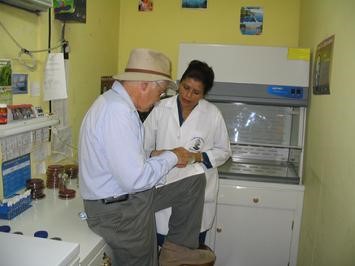
Right: Dr. Robert Harvey working with a Ministry of Health laboratory technician in Jinotega, Nicaragua. 2009.
Dr. Robert thoroughly enjoyed his time roaming the mountains of remote rural areas, testing water for quality and talking to the local people in his excellent Spanish. He will always be remembered by the many friends he still has in Nicaragua for his selfless dedication to helping those in need.
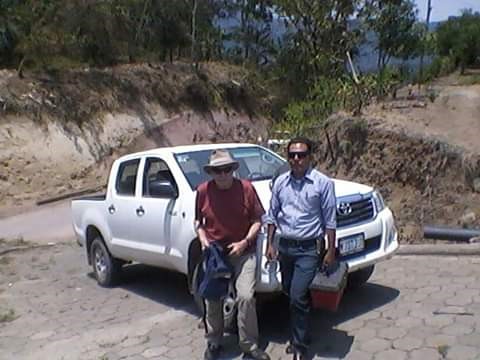
Left: Dr. Roberto (left) during his last visit to Nicaragua. 2016.
Organizational History
TASCA (Taller de Agua y Salud Campesina-Workshop for Water and Rural Health) was formed by three veterans-Joseph Ryan, Frederick Jacob and Dr. Robert Harvey in 1991. The purpose of forming TASCA was to continue supporting Nicaraguan rural water projects that the three had started in 1989 while working in the Cuá-Bocay valley with Veterans for Peace and Veterans Peace Action Teams.
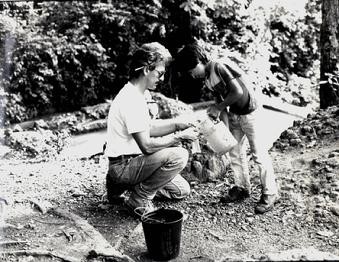
Joe Ryan collecting drinking water samples, Cuá-Bocay valley, Department Matagalpa, Nicaragua 1988.
The need for this work is epitomized in a single statistic from WHO (World Health Organization): “Infant mortality, death before 5 years old, was 68 per 1000 live births in Nicaragua in 1991” compared to 3 – 8/1000 in more developed countries. About 25% of this infant mortality was caused by water-borne diseases. Providing clean drinking water as part of a general improvement in hygiene and sanitation practices is proven to have a major impact on improving infant morbidity and mortality by 25%.
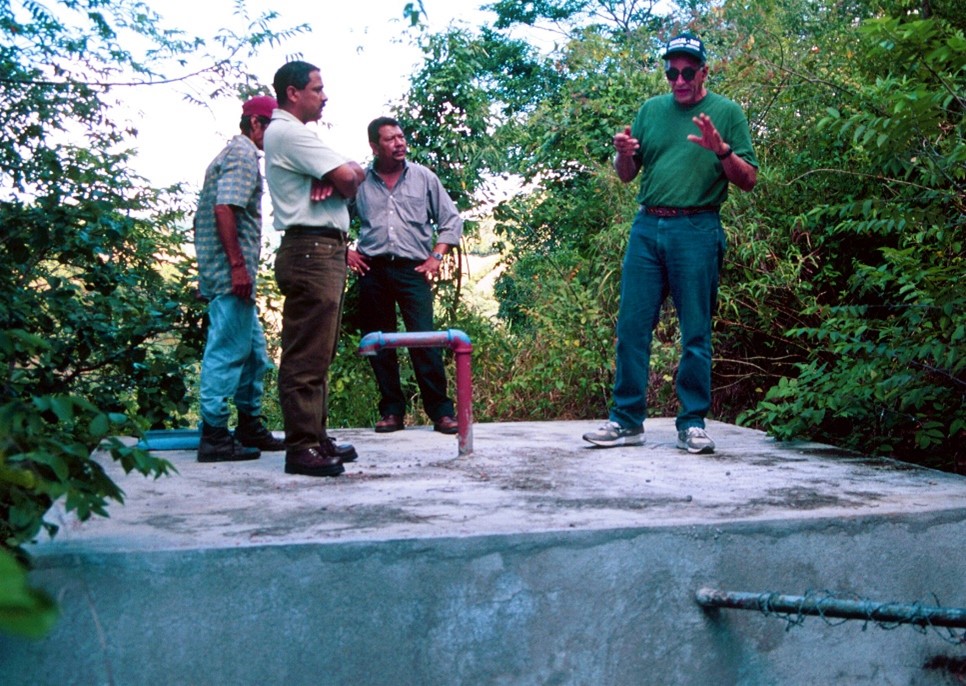
Fred Jacob, (right) TASCA Operations Manager, discussing a chlorinator installation on a typical water storage tank with a villager and two Water Ministry technicians, Jinotega, Nicaragua. 2002
To this end the primary focus of TASCA has been to provide and support water testing and water chlorination necessary to ensure that new and existing water systems provide uncontaminated potable water. TASCA does not construct water systems; this is done by other organizations. TASCA has applied its expertise in microbiology, laboratory management and public health to develop and support the infrastructure necessary for the maintenance of these water systems.
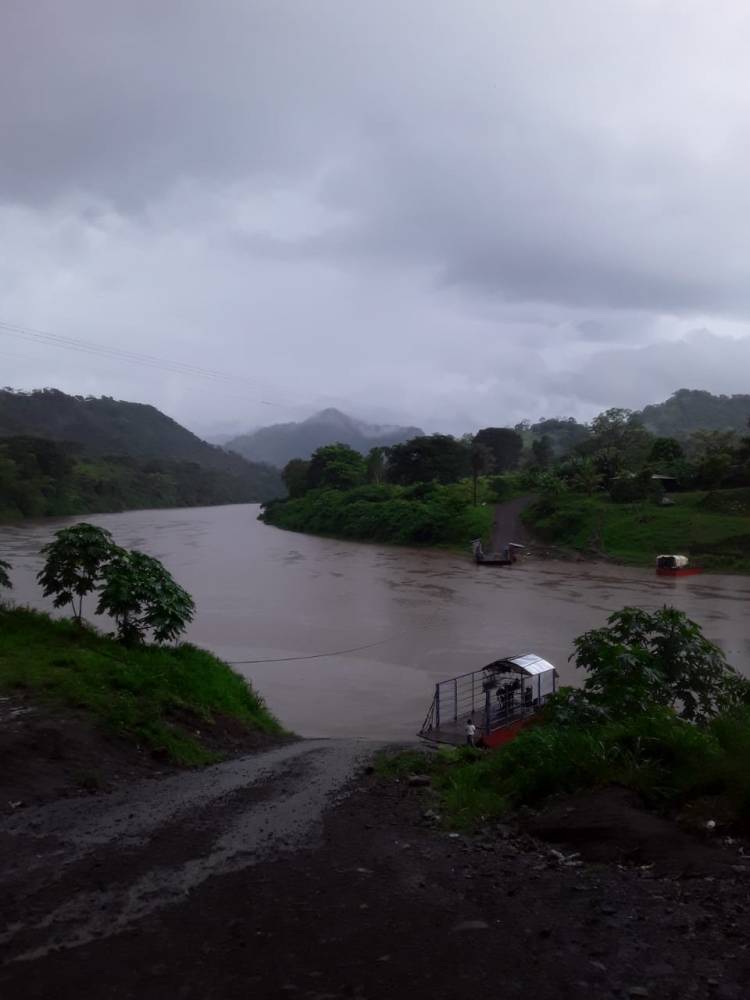
Above: Vista of the Atlantic Coast where TASCA is installing The Manual Chlorinator in small indigenous communities. The Atlantic Coast is distant from the cities of Matagalpa and Jinotega, sparsely populated, and often underserved due to its remoteness. Bocana de Paíwas, 2021.
WHY CHLORINATOR INSTALLATIONS IN NICARAGUA
During the development of The Manual Chlorinator it was our intention and desire to spread the technology of the Chlorinator freely. Clean water could be available to many countries with a simple proven technology to decontaminate drinking water. After field trials proved that the chlorinator worked as designed, we initiated projects in both Honduras and Guatemala as the beginning of our international efforts. However analysis of projects in both countries concluded that our efforts would not meet our goals of community owned chlorinators.
The reasons for the lack of success in Honduras and Guatemala
was the absence of functioning community Water and Sanitation Committees (CAPS.) These CAPS are essential for a successful and sustainable water project. Additionally support from both Health and Water Ministries is critical for any health initiative to succeed and neither Honduras nor Guatemala have involved governmental Ministries. One important reason for the success of The Manual Chlorinator in Nicaragua is due to a strong national CAPS for supporting the local rural CAPS.
When rural water systems were built in the northern provinces of Nicaragua by UNICEF, the communities were required to have Water and Sanitation Committees (CAPS). These Committee members maintain the water systems and each household agrees to a small monthly fee to maintain and support a fund for water system repair by the CAPS. This fee also covers the cost of the chlorine tablets used in The Manual Chlorinator.
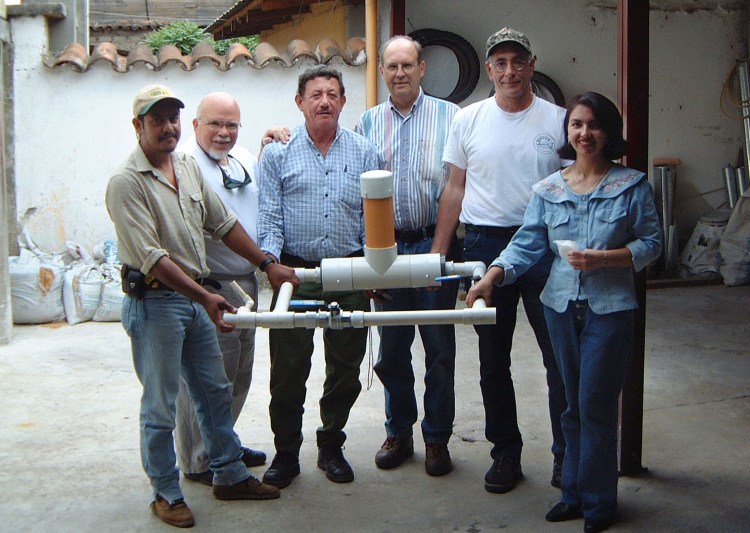
Members of CTI – CEO Bruce Humphreys, Charles Taflin, and Fred Jacob demonstrating The Manual Chlorinator to a Guatemalan government official. Jalapa, Guatemala, 2004.
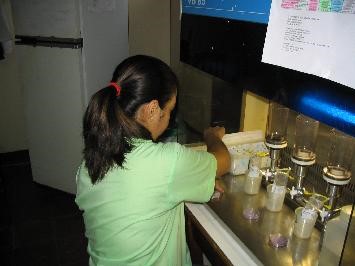
Laboratory technician filtering water samples to test for contamination, Matagalpa lab. 2003.
Our approach has been to engage in long-term collaboration with governmental organizations, such as the Nicaraguan Ministry of Health (MINSA) and the Nicaraguan Water Ministry (ENACAL/DAR.) Within these organizations we collaborate with lab technicians and health care providers who are dedicated, and enthusiastic. TASCA established a scholarship program to improve the qualifications of public health workers, and also provided laboratory equipment to maintain and strengthen the laboratory infrastructure. We have lent our expertise and experience in providing technical consultation and training on a continuing basis.
MANUAL CHLORINATOR DEVELOPMENT
Compatible Technologies International (CTI), a Minnesota NGO, was the funding organization that supported the creation of the Manual Chlorinator in 2001 in association with TASCA. CTI has since changed its name and mission and TASCA is now the sole proprietor and promoter of the chlorinator.
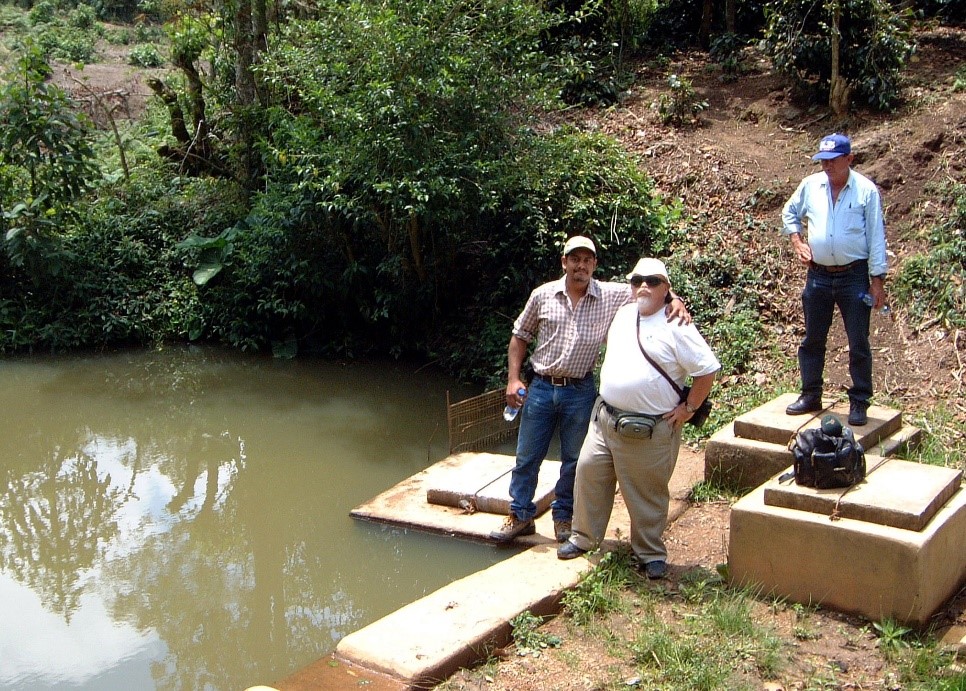
In 2001, having received funding from the Lilly Family Foundation, CTI initiated a pilot chlorinator project in Nicaragua, Central America in the rural community Chilamate. Nicaraguan Water Ministry technicians and Chilamate community members of the local Water and Sanitation Committee were trained in chlorinator construction and operation.
Left: Bruce Humphreys, (center) Executive Director of CTI visiting a potential chlorinator installation with technicians Kike Gonzalez and Manolo Gutiérrez. Limares Guatemala,2004.
A yearlong pilot project in the rural community of Chilamate, Matagalpa testing the water by the community CAPS, gave us enough data to conclude that the chlorinator was an effective tool in delivering clean water in gravity fed rural water systems. In 2002 twenty-one chlorinators were installed in gravity fed water systems in northern Matagalpa and Jinotega Departments. The results of statistical data from the twenty-one systems proved the chlorinator functioned as designed. All systems delivered a constant flow of uncontaminated drinking water, delivering doses of chlorine within the standards set by international and national water and health agencies. Ministry of Health data from communities with chlorinated water show less incidents of intestinal disease.
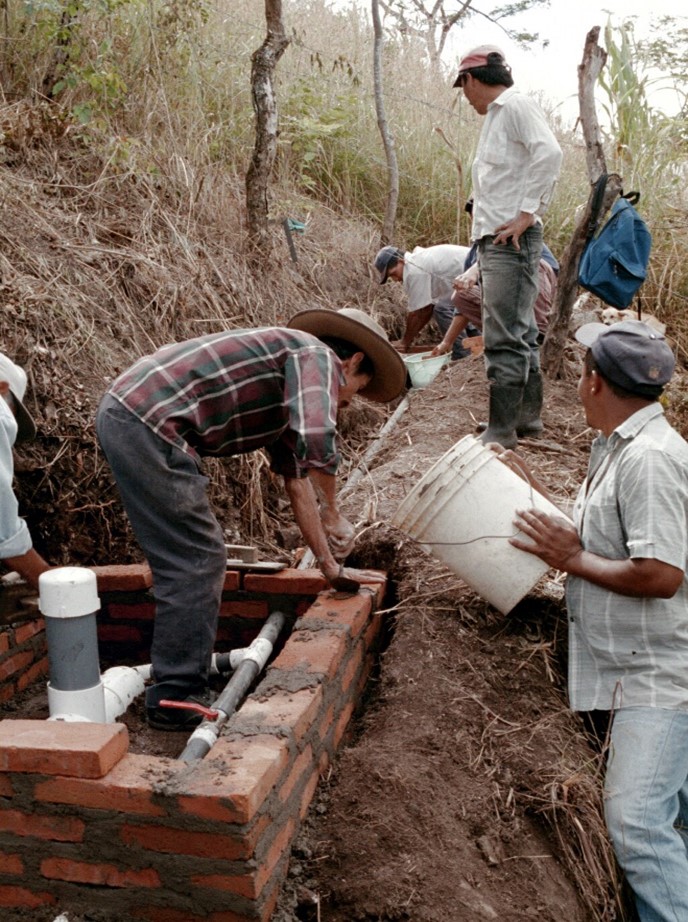
Water Committee members in Chilamate, Matagalpa protecting the first chlorinator in a brick security enclosure. 2001.
 TASCA
TASCA 